
Professional Hammer Cage Repair and Safety Maintenance

Hammer cage repair involves more than patching damaged netting. It starts with assessing the netting, supports and uprights, then determining whether the cage can be repaired or needs replacement. If an inspection identifies a safety issue, the cage may need to remain out of use until it is resolved. A sound repair addresses the cause of the damage as well as the visible fault.
It’s understandable to want a clear answer when a cage is damaged or fails inspection. The right response depends on the condition of the structure, the extent of the netting damage and whether the cage can still contain throwing implements safely.
This guide explains what to consider when checking cage safety, how to respond to an inspection failure, what’s involved in removing an old cage and choosing a replacement, and how ongoing maintenance can help identify problems. It also outlines where professional hammer cage repair fits, so facilities can make informed decisions about keeping their throwing area serviceable and safe.
Checking cage safety and security
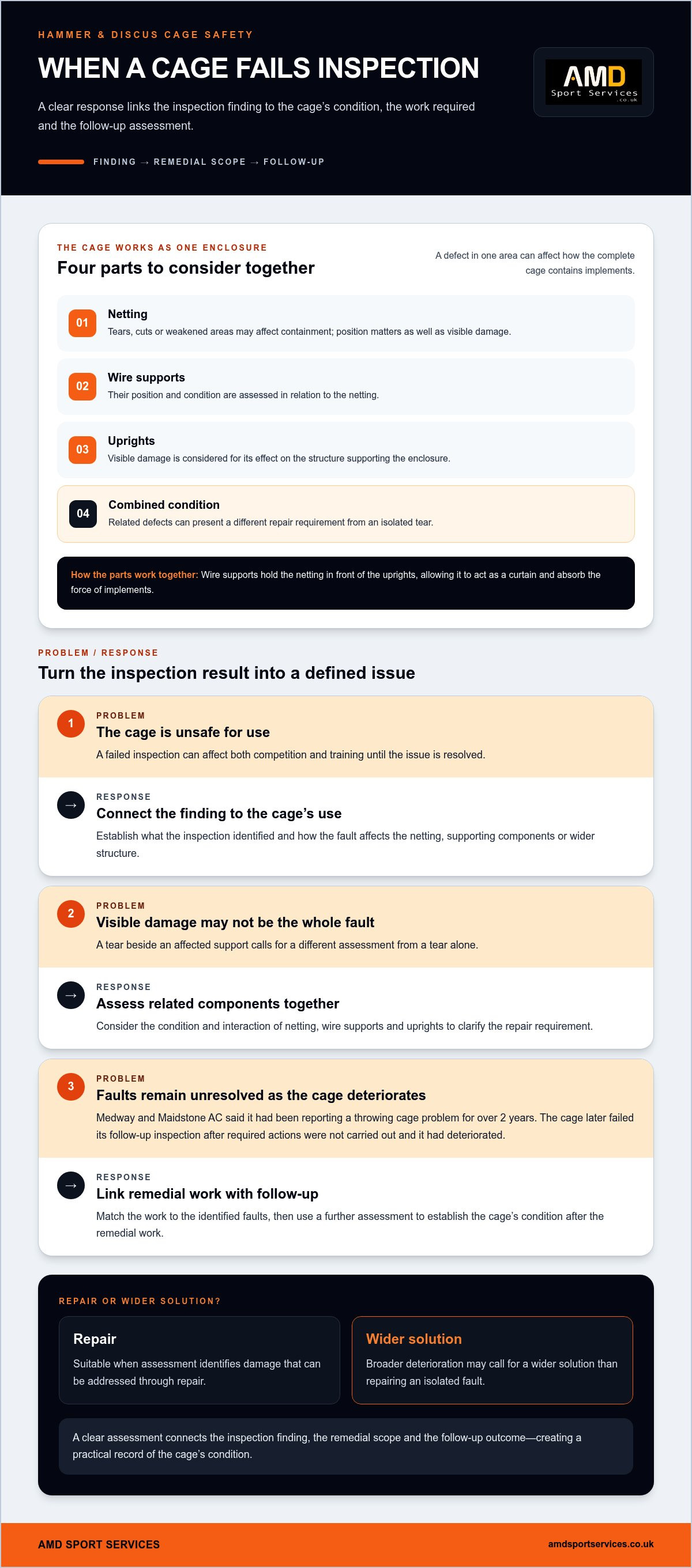
A professional sports equipment safety inspection assesses the hammer cage as a complete enclosure. The netting, wire supports and uprights work together, so findings should explain how their condition affects the cage’s ability to contain implements. A tear matters, but so do its position and its relationship to the supporting structure.
Wire supports are designed to hold the netting in front of the uprights, allowing it to act as a curtain and absorb the force of implements. Inspectors therefore assess the netting’s position in relation to the supports. Displacement can affect how the enclosure performs, even when the netting appears largely intact.
Inspection findings can describe the condition and interaction of the main cage components:
Netting: The assessment records tears, cuts or weakened areas that may affect containment.
Wire supports: Their position and condition are considered in relation to the netting.
Uprights: The inspection considers visible damage and whether it affects the structure’s role in supporting the enclosure.
Combined condition: Findings indicate whether separate defects could affect the cage when considered together.
Assessing the components together helps distinguish isolated damage from problems affecting several parts. For example, a damaged net panel beside an affected support presents a different repair requirement from a tear alone. An inspection report can identify related findings, helping facility managers plan appropriate remedial work.
Assessment also provides a record of the cage’s condition at the time of inspection. That record can support decisions about maintenance and help track whether reported issues have been addressed. A service and maintenance record can keep inspection findings connected with subsequent work.
If a defect affects the netting’s position or its ability to act as a curtain, the assessment should state the concern clearly. The same applies if an upright or support could affect the enclosure as a whole. Specific findings give the facility a practical account of the cage’s condition, rather than a general statement.
The Bridge Leisure Centre's hammer and discus cage failed its TrackMark Unit 2 inspection because it did not meet the safety standards required for athletes. That outcome shows why the inspection result should be treated as a practical prompt to address identified safety concerns, rather than as a general description of appearance. Facility managers can use the findings to understand what requires attention and to plan remedial work before relying on the cage for use. Keeping a record of the inspection and any subsequent work also makes it easier to review whether concerns have been addressed and to maintain a clear history of the cage’s condition.
Hammer and discus cage inspection failure
A failed inspection calls for a professional response that links the finding to the cage’s use and the remedial work required. UK Athletics informed Medway and Maidstone AC that the throwing cage was unsafe and could not be used for meetings involving discus or hammer. Training with the Medway Park cage was also prohibited until the problem was resolved. This example shows how an inspection outcome can affect both competition and training.
The response starts by establishing what the inspection identified and how the fault affects the cage. A professional assessment can clarify whether the issue concerns the netting, supporting components or wider structure. This matters because the required work depends on the defect and its effect, not simply on a failed inspection.
Medway and Maidstone AC said it had been informing Medway Park about the throwing cage problem for over 2 years. The cage failed its follow-up TrackMark inspection after the required actions were not carried out and the cage had deteriorated. The sequence highlights the importance of connecting inspection findings with appropriate work and a subsequent assessment.
Inspection findings: The professional response interprets the reported faults and their implications for use.
Remedial scope: Repair work is matched to the condition and the components affected.
Use status: The facility’s decision reflects the inspection outcome and whether the issue has been resolved.
Follow-up: A further assessment establishes the cage’s condition after remedial work.
A clear assessment turns a failed inspection into a defined technical issue. A report may identify a particular component for attention, while wider deterioration may require assessment of the whole cage. The response should connect the finding, the work required and the follow-up outcome.
Hammer cage repair is suitable when the assessment identifies damage that can be addressed through repair. Broader deterioration may call for a wider solution. In either case, professional judgement links the inspection findings to the equipment’s condition, giving the facility a clear record and practical next steps.
For facilities coordinating inspection findings with remedial work, sports equipment maintenance support can help connect assessment and maintenance planning.
Removing the old cage
Removing a cage is a controlled dismantling project. The work covers the cage assembly, its connections and the space needed to handle components safely. Before work begins, the team identifies which parts belong to the old structure and which surrounding facilities must remain undisturbed. This defines the dismantling scope and helps protect unrelated site features.
The dismantling sequence depends on how the cage is assembled. Netting and supports must be separated from the frame in a planned order, so sections can be handled without placing unnecessary strain on connected parts. For example, a panel that remains attached to a support can be difficult to control during removal. The team plans the sequence around the structure.
Access and component handling also shape the project. Large cage sections may need to be lowered or moved through a restricted area, while smaller parts can be handled separately. The removal plan considers available working space, nearby facilities and how dismantled sections will be taken away from the throwing area. These details affect the order and pace of the work.
Scope: Identify the cage components included in the removal.
Connections: Account for how netting, supports and frame sections join together.
Access: Plan handling around the working area and routes out of the facility.
Handover: Define when dismantling is complete and the area is ready for subsequent work.
A clear handover matters when removal is part of a larger project. It marks when the old structure has been dismantled and the next phase can begin. For example, site preparation or replacement installation can be scheduled after removal is complete, rather than overlapping with dismantling.
The removal record can distinguish dismantled cage components from site features outside the agreed scope. This helps facility managers understand what work took place and provides a reference for the next project stage. A defined sequence, handling plan and handover point make removal easier to coordinate with facility operations and follow-on installation.
At The Bridge Leisure Centre, the first week of the work was allocated to dismantling and removing the old cage. This allocation gives removal a defined place in the wider programme, allowing it to be treated as a distinct stage rather than an activity carried out alongside later site tasks. Keeping that stage identifiable can help teams coordinate access, understand when the existing structure is no longer part of the working area and plan subsequent decisions around a clear transition.
The changeover also depends on communicating the area’s status to those responsible for facility operations and follow-on work. Agreeing what has been removed, what remains and whether the space is ready for its next use reduces uncertainty during the transition. If further work is planned, coordinating its start with the completion of dismantling helps prevent conflicting use of the same area. This makes removal both a physical task and a planning point: the facility can move from managing the existing cage to defining the next phase. Clear coordination keeps that transition within the agreed scope and gives subsequent work an understood starting point.
Selecting a replacement cage
Choose a replacement based on the events the facility needs to support, as throwing cages are not all interchangeable. A hammer-only requirement differs from a combined hammer and discus setup. First define the intended use, then assess how the cage will fit the throwing area and the facility’s operational needs.
The existing site is part of the specification. At The Bridge Leisure Centre, the concrete throwing circle remained in place during replacement. This illustrates why selection should identify which site features will stay and how the new cage will fit around them. Retained features can affect the replacement layout and the work required before installation.
Inspection findings are another factor in choosing a replacement. A cage being replaced after netting damage may need a different scope from one with wider structural deterioration. Use the documented condition of the old equipment, including its netting, supports and uprights, to inform the decision. This helps distinguish a genuine replacement requirement from faults that repair could address.
Intended events: Confirm whether the facility needs hammer use alone or a hammer and discus arrangement.
Existing site: Identify the throwing circle and other features intended to remain.
Condition findings: Use the recorded faults to establish whether repair or replacement is appropriate.
Netting arrangement: Include the netting and its support configuration in the replacement scope.
Installation sequence: Coordinate removal, site preparation and fitting as connected project stages.
Treat netting as part of the complete cage, not as a finishing detail. Its position in relation to the supports affects how the enclosure works. A replacement specification should cover both the structure and the netting arrangement, rather than selecting a frame first and leaving enclosure requirements unresolved.
Project sequencing also affects the choice. If the old cage must be removed before the replacement is installed, the retained site features and installation plan need to align. The Bridge Leisure Centre project separated dismantling from installation, giving each stage a defined place in the work. This approach helps facility teams understand what replacement involves.
Finally, consider how the completed cage will be assessed and maintained. The replacement should address the reasons the old cage was removed, with its intended use and site layout reflected in the project scope. A clear specification gives the installation team a practical basis for fitting a cage suited to the throwing area, rather than simply replicating the old arrangement.
Servicing and maintaining cages
Regular maintenance helps identify damage before it develops into a larger repair issue. For sports equipment, a thorough visual inspection can help identify damage and inform maintenance. Some sites arrange inspections biannually where equipment experiences heavy use. The inspection frequency should reflect how intensively the facility uses its throwing cage.
A maintenance visit can assess the netting, supports and uprights as a complete assembly. For example, a tear in the netting may sit beside impact damage to an upright. Recording both findings gives a clearer picture than treating the visible tear as an isolated defect. The assessment also provides a useful reference for future maintenance.
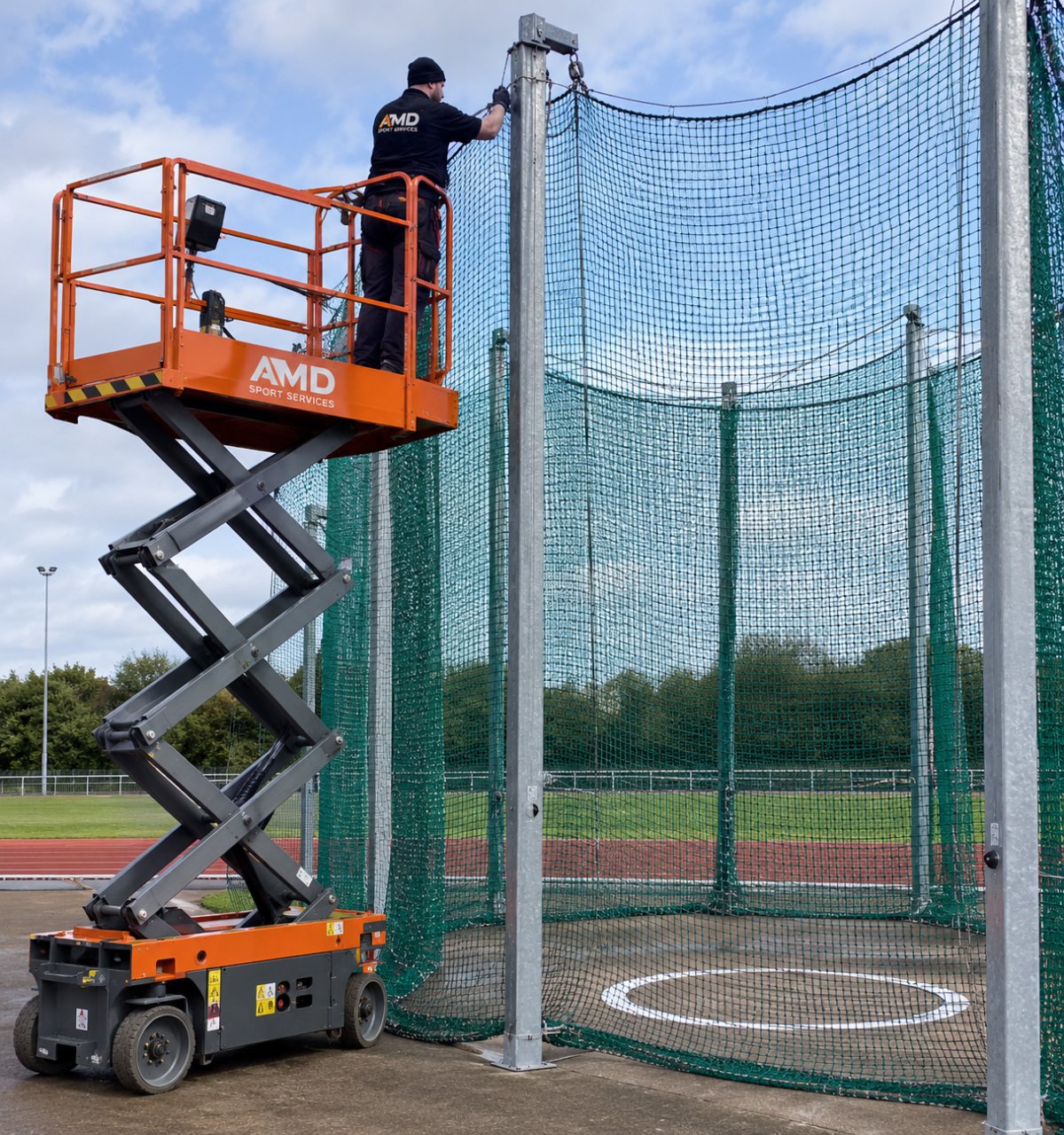
Professional servicing can address faults identified during an inspection, with the work matched to each component’s condition. Common maintenance considerations include:
Netting: Identify cuts, loose sections or damage that affects its coverage.
Supports: Check that wire supports continue to hold the netting in its intended position.
Uprights: Assess visible impact damage or movement affecting the cage structure.
Repair records: Link completed work to the faults identified during the assessment.
Impact damage needs attention because repeated strikes can affect several parts. At The Bridge Leisure Centre, implement impacts had cut the netting in many places. This illustrates why maintenance should consider the pattern and extent of damage, not just whether an individual tear appears repairable.
Maintenance records help facilities track recurring issues across inspections and repairs. A record can identify the affected area, describe completed work and note whether further attention followed. For example, repeated damage to the same section of netting gives the next assessment useful context. Records also connect inspection findings to maintenance decisions.
When inspection findings call for specialist work, repairs can address damaged netting or other cage components. The scope depends on the recorded condition and whether the issue is localised or affects the wider assembly. This keeps servicing focused on the equipment’s actual condition, rather than applying the same approach to every fault.
Facilities arranging regular assessments and repairs can use sports equipment maintenance support to keep cage servicing connected with wider equipment upkeep.
AMD Sport Services: Sports equipment safety inspections
AMD Sport Services carries out sports equipment safety inspections to assess equipment condition and identify issues requiring attention. For a hammer cage, an inspection can clarify whether damage affects the netting, supports or wider structure, giving facility managers a clear basis for planning next steps.
An inspection is useful when a cage has visible damage, findings need addressing or its condition has changed through regular use. The assessment focuses on the equipment and its recorded condition, rather than assuming every fault needs the same response. Clear findings support informed maintenance decisions and facility planning.
For a professional assessment of sports equipment, contact AMD Sport Services to discuss an inspection.
Plan the next step for your throwing area
A well-managed throwing area depends on decisions that remain useful beyond the immediate repair. Clear inspection findings help facilities plan work around their programme, site layout and future equipment needs. If damage is limited, hammer cage repair may resolve the issue. If the condition or layout calls for a broader change, consider replacement planning alongside the rest of the site.
AMD Sport Services also carries out sports equipment safety inspections, basketball goal installation and safety surfacing. Considering these needs together can help schools and facilities organise practical improvements across their sports provision, rather than treating each piece of equipment as an isolated concern.
For support with your facility’s next steps, contact AMD Sport Services. A clear conversation can help you move towards a suitable plan for your throwing area.
Comments